Pelvic floor coordination
Learn to contract, relax and time the pelvic floor with breathing, coughing, lifting and movement. Some patients first need relaxation before strengthening is effective.
 Call 331-243-6513
Private prolapse support at home
Pelvic heaviness, pressure or a bulging sensation can make lifting, exercise, bowel movements and everyday activity feel uncertain. Individualized pelvic floor therapy can help you understand the symptoms and build a practical support plan.
Prefer email? Email Dr. Melissa
Private one-on-one care • In-network with BCBS PPO • Internal assessment is always optional
Clinical content reviewed by Dr. Melissa Scholl, PT, DPT • Updated
Clear, non-alarming information
Pelvic organ prolapse occurs when the support around the bladder, uterus or vaginal walls changes and one or more structures descends toward the vaginal opening. A clinician may use terms such as cystocele, rectocele or uterine prolapse to describe the area involved.
Symptoms do not always match the degree of support change. Some people have visible prolapse with little discomfort, while others notice significant pressure or activity limits. A medical provider can diagnose the type and stage; pelvic floor physical therapy focuses on the muscle, pressure, bowel and movement factors that may improve function and symptom control.
More than generic Kegels
A prolapse plan should match your muscle function, symptoms and goals. The goal is not to promise that anatomy will disappear; it is to improve support, reduce aggravating pressure and help you return to valued activities with better tools.
Learn to contract, relax and time the pelvic floor with breathing, coughing, lifting and movement. Some patients first need relaxation before strengthening is effective.
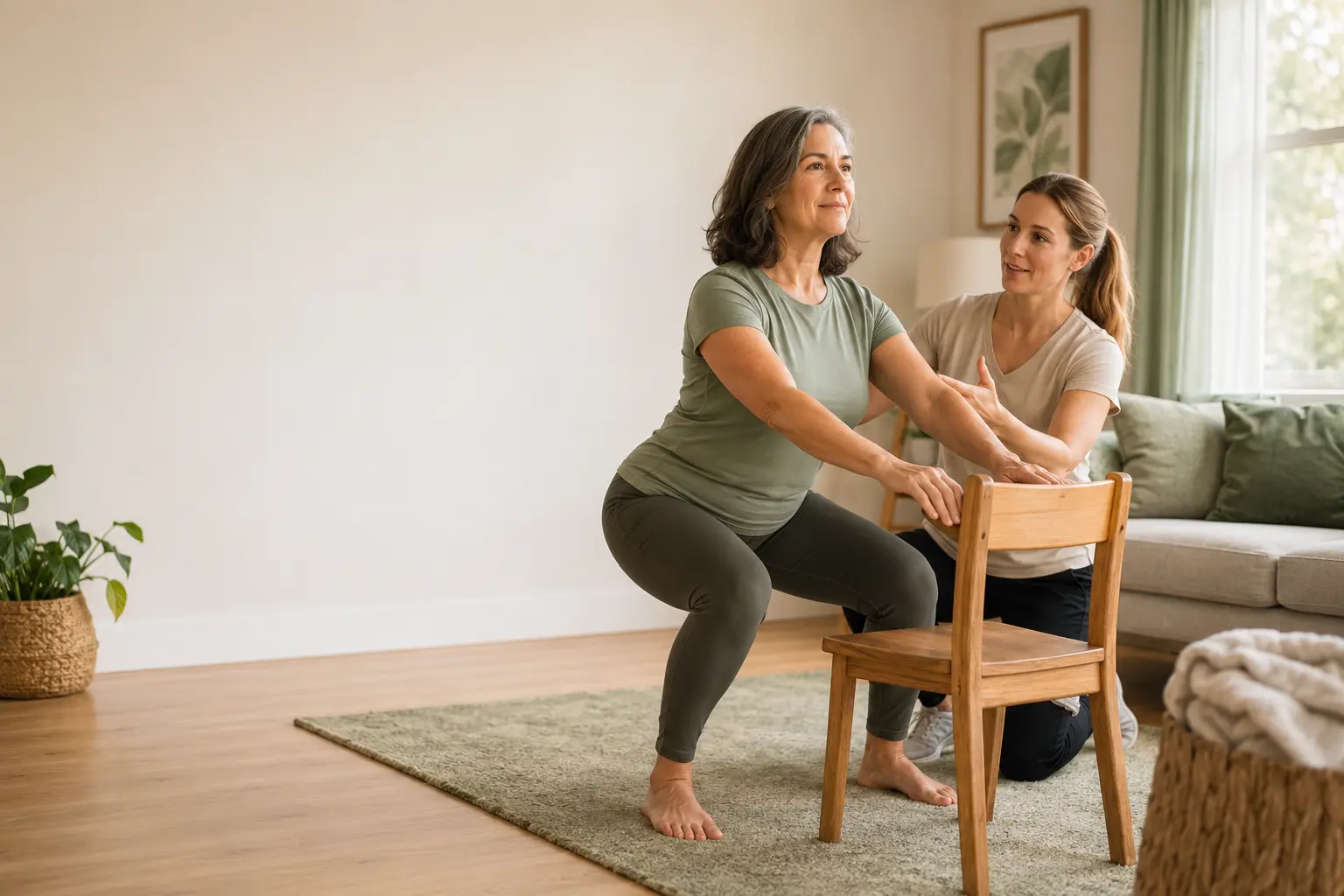
Practice exhaling and distributing effort during squats, lifting, transfers, workouts and childcare rather than repeatedly bearing down.
Build a progressive program for the pelvic floor, hips and trunk based on your starting point instead of relying on a one-size-fits-all Kegel routine.
Address stool consistency, positioning, breath and pelvic floor relaxation to reduce constipation and repeated straining.
Adjust load, impact, range, rest or exercise selection temporarily while maintaining as much meaningful activity as possible.
Physical therapy can complement evaluation by an OB-GYN or urogynecologist and may be used alongside a pessary or other medical treatment.
Keep moving with a better strategy
A prolapse diagnosis does not automatically require avoiding strength training, running, intercourse or lifting a child forever. Symptoms, tissue support, training history and recovery capacity differ, so the right dosage is individual.
Physical therapy can help identify which variables matter most: total load, impact, breath-holding, fatigue, constipation, cycle or hormonal factors, time of day, recovery between sessions and the way pressure is managed during effort. The plan may temporarily reduce a trigger while building capacity, then reintroduce it in stages.
The right care team
A medical pelvic examination can confirm whether symptoms are related to prolapse and discuss options such as observation, a pessary or surgery. Physical therapy often works alongside—not instead of—medical evaluation.
Answers before you begin
Therapy may improve symptoms, muscle support and daily function, especially when the program is individualized. It cannot promise that all anatomical descent will disappear. Some people also benefit from a pessary or medical and surgical options.
Not automatically. Many people can continue or return to strength training with changes to load, breathing, technique, recovery and progression. Your symptoms and medical findings should guide the plan.
No. Strength may be helpful, but pelvic floor timing, relaxation, endurance, breathing, constipation management and whole-body strength also matter. A tight or poorly coordinated muscle may need a different starting point.
Yes. A pessary provides mechanical support, while physical therapy can address muscle function, pressure management, bowel habits, movement and exercise. The two approaches can complement each other.
No. It can provide useful information about pelvic floor strength, relaxation and support, but it is optional. Melissa explains the purpose and alternatives, and you may decline or stop at any time.
Yes. Some people notice more pressure later in the day, after prolonged standing, constipation, heavy lifting or higher-impact activity. Tracking patterns helps tailor treatment.
Take the next step
A free 15-minute phone consultation is a simple, private way to ask questions and decide whether an evaluation makes sense.