Pelvic and perineal pain
Aching, burning, pressure or sharp pain between the scrotum and anus, in the lower abdomen or deeper in the pelvis.
 Call 331-243-6513
Private pelvic health care for men
Pelvic, groin, genital or tailbone pain can affect sitting, exercise, urination, sexual function and sleep. A pelvic health physical therapy evaluation looks beyond the painful spot to understand muscle tension, coordination, breathing and movement.
Prefer email? Email Dr. Melissa
Private one-on-one care • In-network with BCBS PPO • Internal assessment is always optional
Clinical content reviewed by Dr. Melissa Scholl, PT, DPT • Updated
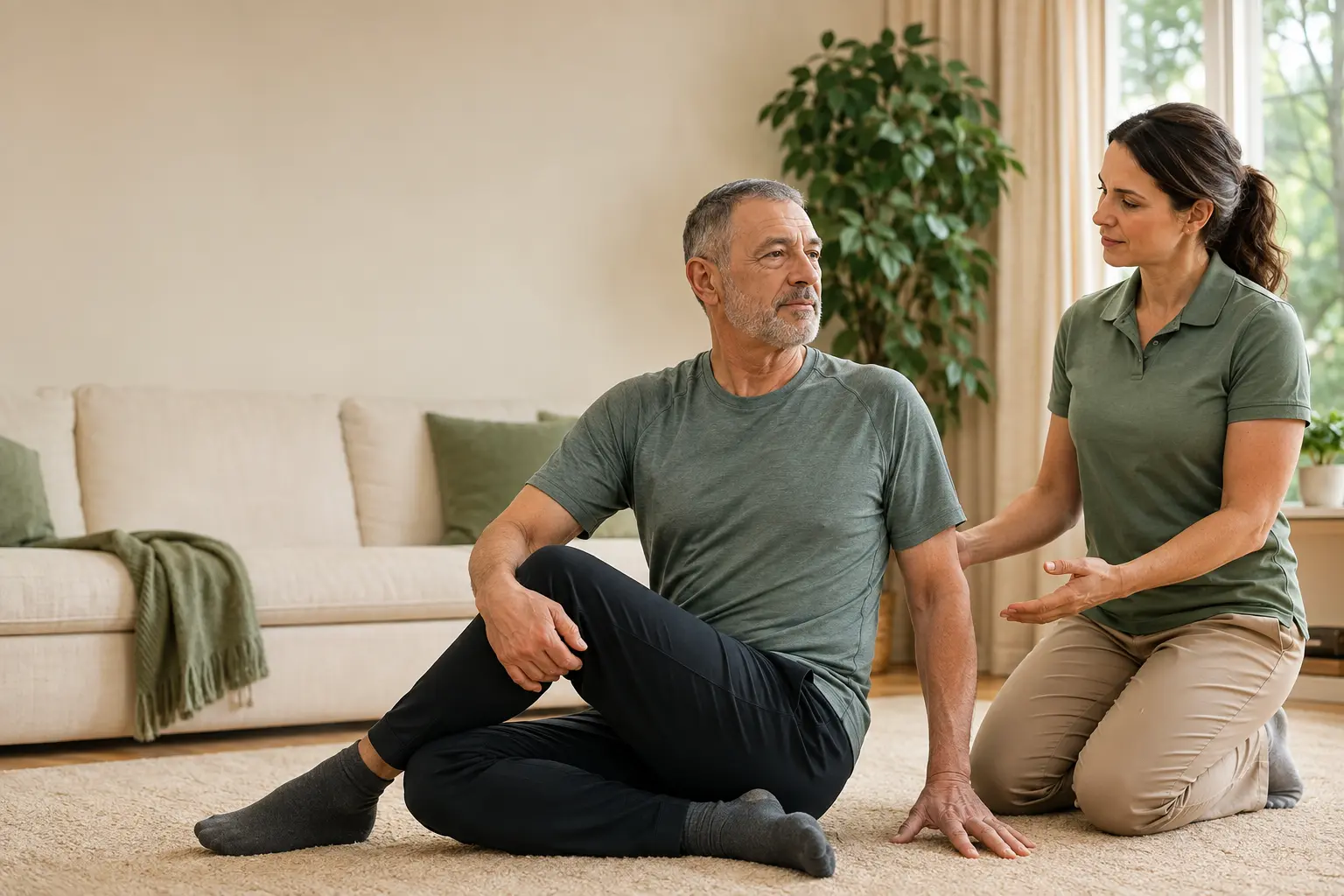
Men have pelvic floors too
Male pelvic floor dysfunction can present as pain, urinary difficulty, bowel symptoms or sexual symptoms. These concerns may coexist and should be screened for medical causes before being attributed to muscle dysfunction alone.
Aching, burning, pressure or sharp pain between the scrotum and anus, in the lower abdomen or deeper in the pelvis.
Persistent or recurring discomfort influenced by sitting, lifting, exercise, bowel movements or muscle tension after medical causes are evaluated.
Pain at rest, during or after urination, with arousal or after ejaculation can occur in complex pelvic pain patterns and needs respectful assessment.
Difficulty starting, a weak or interrupted stream, post-void dribbling or feeling unable to empty can involve pelvic floor tension or coordination, among other causes.
Symptoms may involve the pelvic floor, hips, spine, nerves, posture and the way pressure is distributed during prolonged sitting.
Read about pelvic pain when sittingPain with erection or ejaculation, guarding and fear of a flare can be part of chronic pelvic pain and deserve coordinated medical and rehabilitation care.
Often more than one contributor
The pelvic floor works with the diaphragm, abdominal wall, hips and nervous system. When it stays guarded, it may become tender and less able to relax for urination, bowel movements or sexual function. Pain can also change movement, breathing and attention in ways that reinforce the cycle.
Chronic prostatitis/chronic pelvic pain syndrome is a medical diagnosis made after other causes are considered. It may involve pain in the perineum, penis, scrotum, lower abdomen or back along with urgency, frequency, weak stream or pain after ejaculation. Pelvic floor dysfunction can be one treatable contributor, but physical therapy does not assume that every pelvic symptom comes from the muscles.
A respectful, individualized process
We discuss pain location, urinary and bowel function, sexual symptoms, activity, prior testing, surgery, medications and the goals that matter most.
Melissa may examine breathing, abdominal tension, hips, spine, posture, strength and the positions or tasks that reproduce symptoms.
External observation or an internal rectal muscle assessment may be discussed when useful. It is always explained, optional and based on consent.
Treatment may begin with relaxation, diaphragmatic breathing, mobility and manual techniques, or with coordination and strengthening when weakness is present.
A graded plan may address sitting, lifting, cycling, running, gym training, bowel habits, bladder emptying or sexual activity without forcing a one-size timeline.
Know when therapy is not the first stop
Choose the right men's pathway
Start here when pain, guarding, hesitancy, weak stream, pain with sitting or pain with sexual activity is the main concern.
Choose the post-prostatectomy service when urine leakage, bladder control, surgical recovery and return to activity are the main goals.
Post-prostatectomy therapyUse a free 15-minute consultation to describe the symptoms and determine the best starting point.
Schedule a phone consultationAnswers before you begin
Yes. The pelvic floor needs to relax and coordinate during urination. Excess tension can contribute to hesitancy, a weak stream or incomplete emptying, but prostate enlargement, blockage, infection, medication and neurologic conditions also require consideration.
No. Prostatitis describes several medical conditions, including bacterial infection and chronic pelvic pain syndrome. Similar symptoms can come from different causes. Pelvic floor therapy addresses relevant muscle and movement contributors after appropriate medical screening.
Not necessarily. When muscles are tight or painful, treatment often begins with relaxation, breathing, mobility and coordination. Strengthening is used when it matches the findings and goals.
No. It can provide information about pelvic floor muscle tension, tenderness and coordination, but it is optional. Melissa explains the purpose, alternatives and process before asking for consent.
It may help when muscles, nerves, movement or referred pain contribute, but sudden pain, swelling, a mass or other concerning changes require prompt medical evaluation first.
Yes. The Healthy Pelvis provides private, one-on-one in-home care in Elmhurst and nearby western suburbs for appropriate men's pelvic health concerns.
Take the next step
A free 15-minute phone consultation is a simple, private way to ask questions and decide whether an evaluation makes sense.