
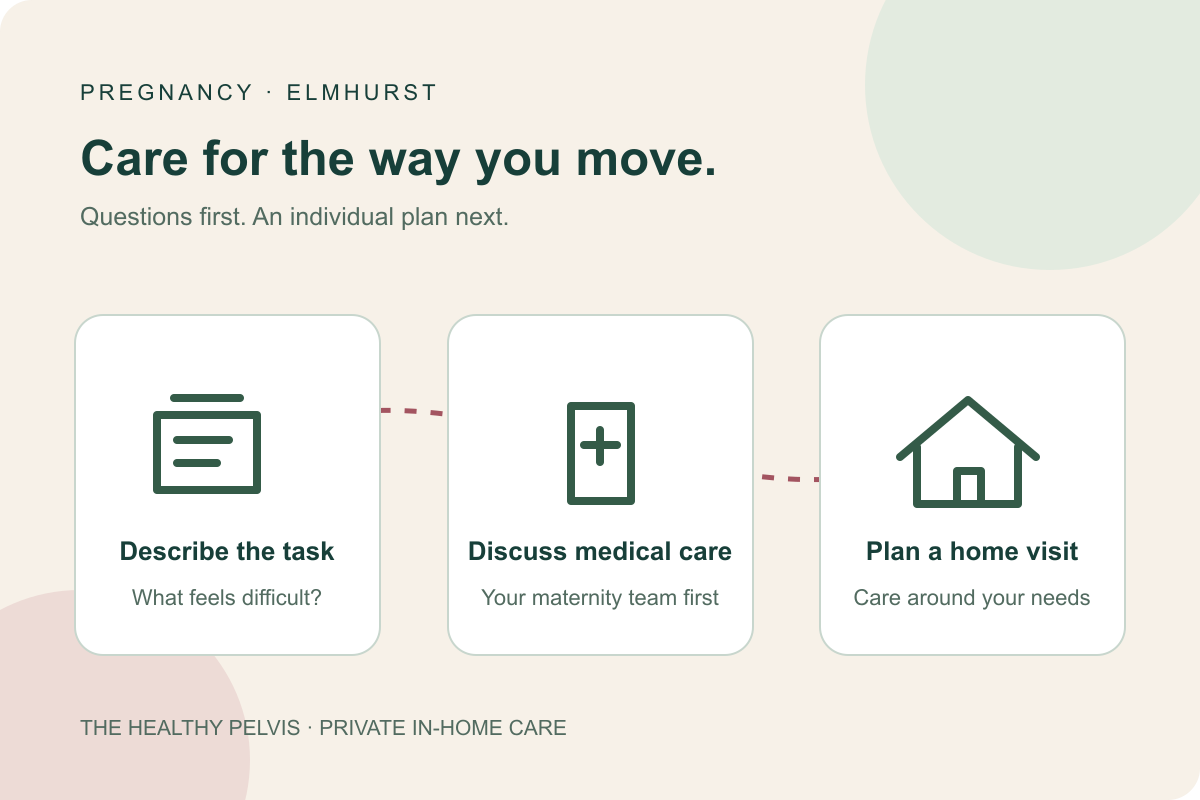
When rolling in bed, getting dressed or using the stairs becomes uncomfortable during pregnancy, it can be difficult to know which professional to call. If you live in Elmhurst, you can ask your obstetric team about your symptoms and explore whether a private physical therapy visit at home fits your needs.
Start with your symptoms—not a self-diagnosis. Tell your obstetric provider about pregnancy pain, and ask whether a musculoskeletal physical therapy assessment is appropriate.
What does pelvic girdle pain mean?
Pelvic girdle pain describes pain around the pelvic joints, including the pubic region in front or the sacroiliac area toward the back. Some people have heard the term symphysis pubis dysfunction, or SPD. A label found online does not establish the cause of your pain.
Movement-related symptoms can occur with walking, stairs, turning in bed or standing on one leg. Tell your maternity team about pain and changes in mobility. Their assessment helps distinguish musculoskeletal concerns from other pregnancy problems.
Describe the task that is difficult
You do not need to arrive with the right medical vocabulary. A short description of where you feel discomfort and when it appears is a useful starting point. Notice whether the difficulty is getting into a car, dressing, caring for another child or walking between rooms.
Write down when the symptoms began, whether they are changing and what your obstetric provider has advised. These observations help the conversation; they are not a home diagnostic test.
- Where do you feel the pain: front of the pelvis, back, groin or elsewhere?
- What movement brings it on, and what task would you like to do more comfortably?
- Has walking or putting weight on a leg become difficult?
- Are there medical restrictions or pregnancy complications your therapist should know about?
What might a physical therapy evaluation involve?
After reviewing your pregnancy history and medical guidance, a therapist may assess comfortable movement, posture, hips and the tasks that trouble you. The purpose is to understand your situation and explain appropriate next steps—not to apply the same exercise plan to everyone.
At The Healthy Pelvis, assessment choices are discussed first. An internal pelvic floor examination is not automatic, and you can decline, pause or ask about alternatives. Ask what a suggested assessment would add to the plan.
Care may include individualized movement advice, activity pacing or exercise when appropriate. Medication advice and obstetric decisions belong with your medical team. This guide does not prescribe an exercise routine or recommend that you purchase a support device.
Why an Elmhurst home visit may be practical
A clinic trip can be another demanding task when getting into the car or walking is uncomfortable. The Healthy Pelvis offers one-on-one care in your home in Elmhurst and nearby western suburbs, subject to location and availability.
Your own surroundings can help make the discussion specific: the stairs you use, the height of a chair or the daily task you are trying to manage. Discuss privacy, access and any mobility concerns privately when scheduling. You do not need to buy equipment before an evaluation.
The initial free 15-minute phone consultation is a conversation about questions and care options. It is not an examination, a diagnosis or medical clearance.
Questions to ask before scheduling
Use the consultation to clarify whether this is the right type of care and what information Melissa needs. Share your provider’s restrictions before planning treatment. Ask whether communication with your obstetric team would be helpful.
- Do my symptoms need medical evaluation before a PT visit?
- What would you assess if my main difficulty is walking or rolling in bed?
- How can a home visit be arranged if I have stairs or limited space?
- What should I bring from my obstetric appointments?
- How will the plan change if symptoms or medical guidance change?
When medical care comes first
Do not assume all pregnancy pelvic pain is a joint or muscle problem. Contact your obstetric team about new or worsening symptoms. Seek immediate medical attention for urgent warning signs such as severe abdominal pain, vaginal bleeding, fluid leakage, chest pain, trouble breathing or fainting. Tell the treating team you are pregnant; call 911 for an emergency.
If pain severely limits mobility or you cannot bear weight, seek prompt medical advice rather than waiting for a routine consultation. PT does not replace maternity care.
Insurance and getting started
The Healthy Pelvis accepts Blue Cross Blue Shield (BCBS) PPO only. A BCBS card by itself does not confirm that your exact plan is an eligible PPO plan or that a visit will be covered. Confirm network participation, referral or authorization requirements and your expected responsibility before treatment.
If you do not have BCBS PPO, ask the practice about current self-pay arrangements rather than assuming another insurance plan is accepted. Benefit verification is not a guarantee of payment. The phone consultation is free; treatment appointments are separate.
Common questions
Does pubic pain mean I have SPD?
Not necessarily. Pain location alone cannot establish a diagnosis. Your obstetric provider and an appropriate assessment help identify the next step.
Should I wait until after birth to ask for help?
You can discuss symptoms during pregnancy. The timing and type of care should reflect your medical situation and your obstetric provider’s advice.
Will I need an internal examination?
It is not automatic. Ask why an assessment is suggested and what alternatives are available. You can decline or stop.
Can I ask about care if I have another child at home?
Yes. Discuss who will be present, privacy and practical scheduling needs before the home visit.
Sources and further reading
Medical background is drawn from the resources below. Practice information describes The Healthy Pelvis’s services; it is not a claim of guaranteed results.
Find the next page that fits your concern
Pregnancy pelvic floor therapy and birth preparation Private pelvic floor care in Elmhurst Planning postpartum care at home BCBS PPO only: insurance and cost questionsA conversation before a commitment
Ask about private care at home.
Talk with Melissa about services and current availability in Elmhurst. The free phone consultation is separate from an evaluation or treatment visit.
Educational information from The Healthy Pelvis, not a diagnosis, medical clearance or individualized treatment advice. Seek medical assessment when appropriate. Your medical team’s guidance and your physical therapy evaluation determine your care.